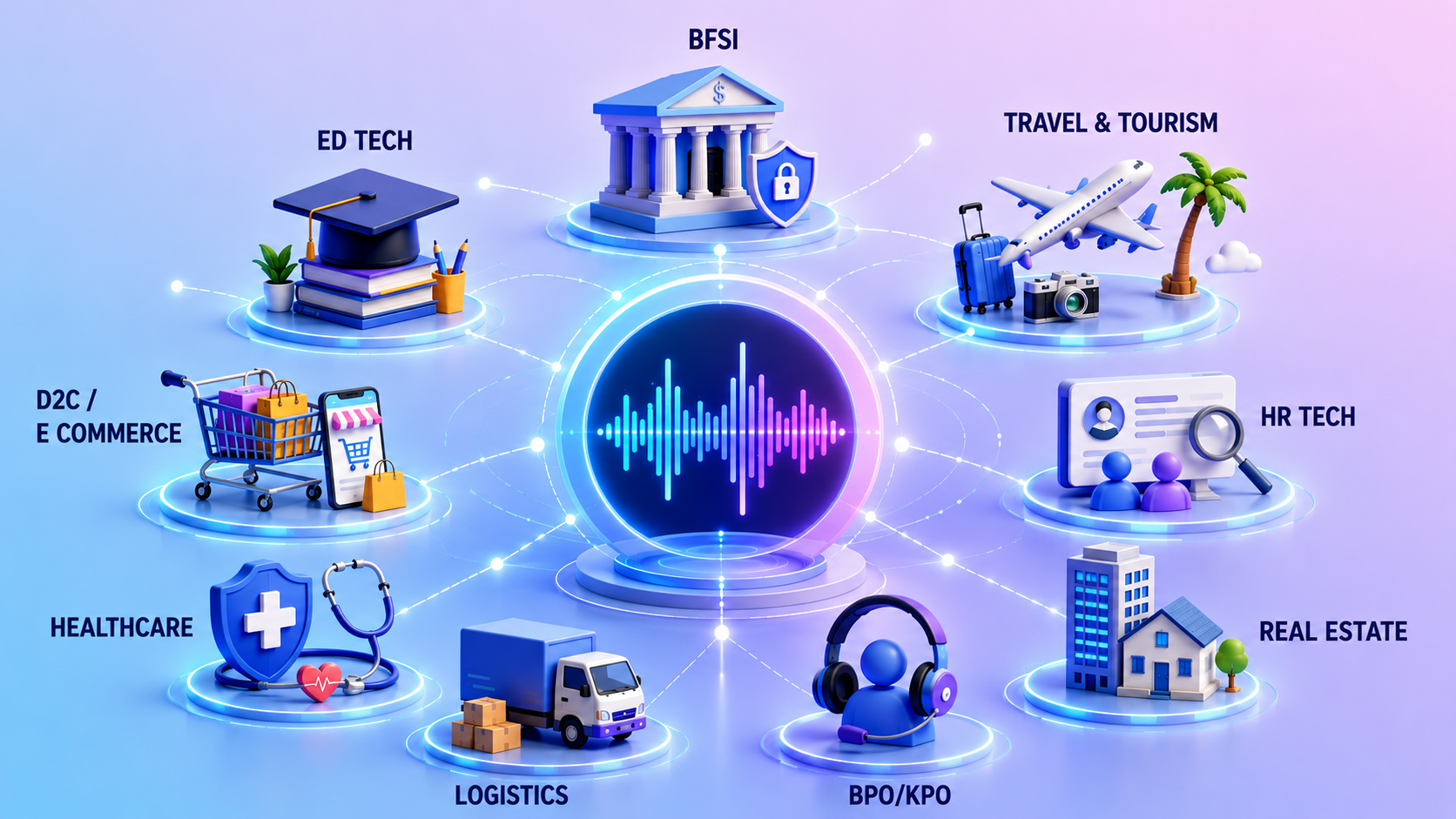
How Conversation Intelligence Solves Business Problems by Industry
Every contact center has the same quiet fear. Somewhere in the 95% of calls nobody reviews, a compliance risk is sitting unflagged, a frustrated customer is about to churn, or a rep just found the perfect pitch nobody wrote down. That’s the real story behind conversation intelligence business problems. It isn’t about adding another AI dashboard. It’s about finally seeing what’s been invisible all along.
Most vendors sell conversation intelligence as one tool with one feature list. But a bank, a university admissions team, and a logistics company aren’t fighting the same fire. This piece breaks down what actually changes by industry, so you know exactly where to look.
Why the Same Tool Behaves Differently by Industry
Conversation intelligence platforms all do roughly the same thing under the hood. They transcribe conversations and use AI technologies like natural language processing to identify key moments, sentiment, and pain points. But what counts as a “signal” shifts completely once you cross industries. IBM
In banking, a signal might be a missed regulatory disclosure. In EdTech, it’s a parent’s hesitation buried three calls into a decision cycle. In a marketplace, it’s the moment a seller starts sounding like they’re about to file a dispute. Same engine, completely different job. This is the piece most generic explainers skip.
Mapping Business Problems to the Right Capability
Here’s a quick way to think about it before you evaluate any platform:
Industry
Core Problem
What CI Needs to Catch
BFSI
Compliance blind spots
Disclosure gaps, risk language
EdTech
Long, multi-stakeholder cycles
Hesitation signals, decision-maker shifts
Marketplace
Trust erosion
Dispute language, seller frustration
D2C/Ecommerce
Silent churn drivers
Product complaints, refund friction
Healthcare
Documentation and care gaps
Patient frustration, missed follow-ups
Logistics
Delivery breakdowns going unnoticed
Delay patterns, escalation triggers
BPO/KPO
Inconsistent QA across client accounts
Scoring drift, client-specific compliance gaps
Real Estate
Long-cycle buyer drop-off
Intent signals, objection themes
HR Tech
Candidate attrition mid-process
Drop-off signals, onboarding friction
Travel & Tourism
Seasonal complaint spikes
Booking friction, peak-window escalations
Enterprises that skip this mapping tend to buy tools optimized for sales coaching and then wonder why compliance or CX teams get little value. Manual QA and reporting waste valuable time and resources that could go toward strategic growth instead, and a mismatched tool just adds another manual layer on top. Uniphore
BFSI: In lending and collections calls, Odio catches missed disclosures and risk language across every conversation, not just the 2 to 5% a QA team can manually sample.
EdTech: Enrollment hesitation and objection patterns often surface late in long, multi-touch admissions cycles. Odio picks them up early, across every touchpoint.
D2C and ecommerce: Recurring product complaints and refund friction are churn signals in disguise. Odio flags them before they turn into lost customers.
Healthcare: Documentation gaps and patient frustration in appointment and billing calls are easy to miss manually. Odio surfaces them automatically.
Logistics: Delivery delay patterns and escalation triggers pile up fast across high-volume support queues. Odio detects them in real time.
BPO and KPO: QA scoring across outsourced teams handling multiple client accounts tends to drift. Odio standardizes it, account by account.
Real estate: Buyer intent signals and objection themes get buried across long-cycle site visit follow-ups. Odio brings them to the surface.
HR tech: Candidate drop-off signals in recruitment and onboarding conversations often go unnoticed until attrition shows up in the numbers. Odio catches them earlier.
Travel and tourism: Seasonal complaint spikes and booking friction peak during high-travel windows. Odio tracks them as they build, not after the fact.
What Actually Changes Under the Hood
The workflow isn’t identical either. BFSI needs strict data residency and audit trails. EdTech needs attribution across weeks, not single calls. Marketplaces need speed, since a dispute signal caught a day late is a dispute already escalated. Most organizations still capture and analyze less than 30% of their conversation data, and that gap looks different depending on what’s hiding in the other 70%. AssemblyAI
Metrics That Actually Matter
Skip the generic “percent improvement” stats. Track what your industry cares about: compliance flag turnaround time for BFSI, admission conversion lift for EdTech, dispute resolution speed for marketplaces, and complaint recurrence rate for B2B brands. Vague benchmarks make for nice slides. Specific ones make for better decisions.
A Quick Checklist Before You Buy
Ask any vendor these questions before signing:
Does it explain compliance findings, or just flag them with no context
Can it track a single buyer’s journey across multiple calls and weeks
Does it work at brand level, not just generic industry level
Where Even Good Tools Still Fall Short
No platform solves every problem out of the box. Integration with existing CRM and ticketing systems still takes real setup time. Rollout across multiple industry verticals within one company needs careful configuration, not a one-size template. Be wary of any vendor who tells you otherwise. Honest limitations build trust faster than inflated promises.
The Bottom Line
Conversation intelligence business problems don’t have one shape. They shift by industry, by workflow, and by what’s actually at stake in that conversation. The businesses winning here aren’t the ones with the flashiest dashboard. They’re the ones matching the right signal to the right problem, vertical by vertical.
If you’re evaluating conversation intelligence for your industry, the real question isn’t whether it works. It’s whether it’s built to catch what your industry actually needs it to catch. See how Odio approaches this problem, and decide for yourself if it’s the fit you’ve been looking for.