
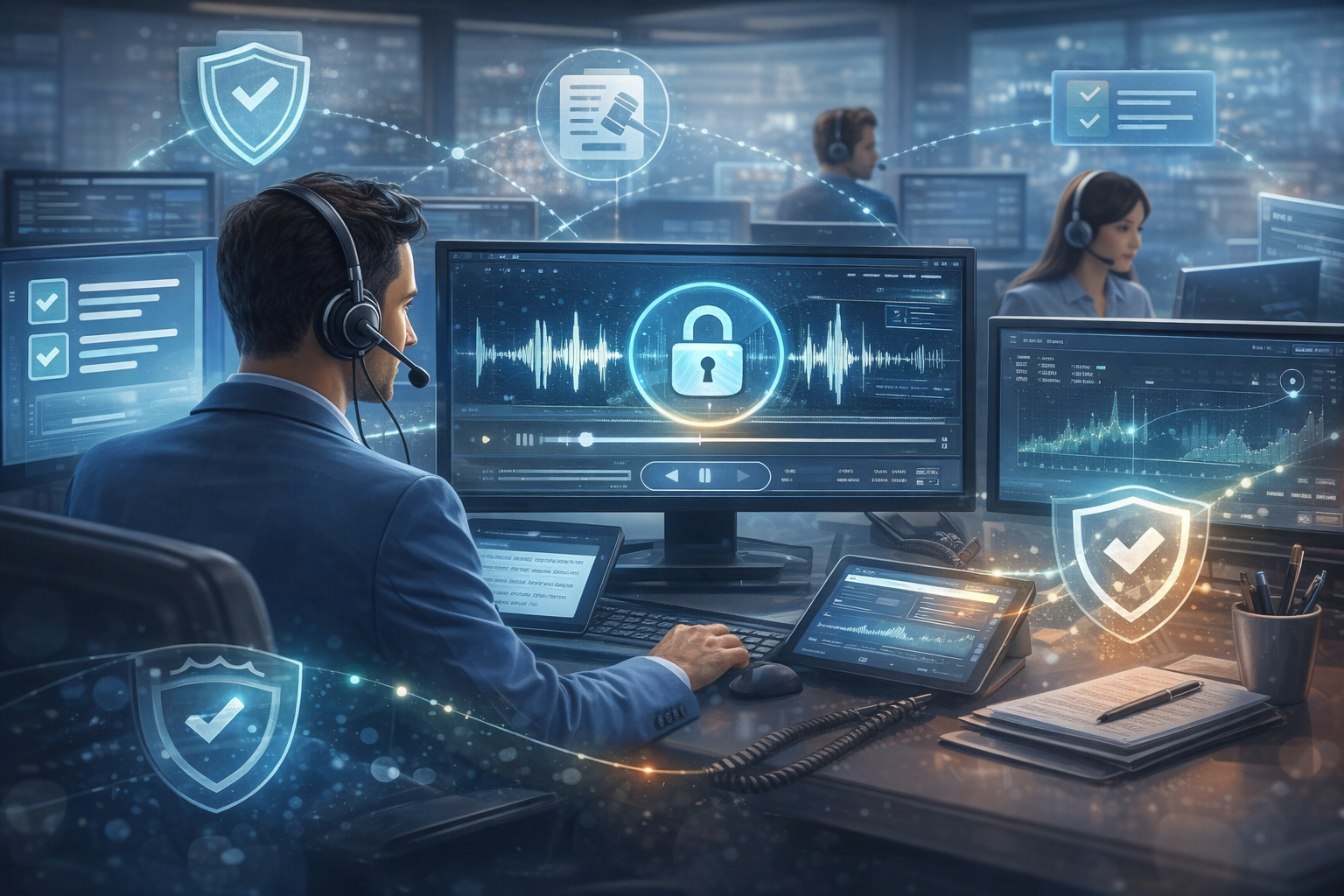
Call monitoring plays a critical role in maintaining both regulatory compliance and service quality in customer support operations. As contact centers handle increasing call volumes across industries, monitoring conversations helps organizations meet legal requirements while improving agent performance.
This article explains how call monitoring supports compliance and quality, and why it is an essential component of modern contact center management.
What Is Call Monitoring?
Call monitoring refers to the process of reviewing, analyzing, and evaluating customer calls to ensure conversations follow defined standards. This may include live monitoring, call recordings, or post-call analysis using automation and analytics tools.
Call monitoring is commonly used in:
- Customer support teams
- Sales and collections operations
- Regulated industries such as finance and healthcare
👉 /contact-center-intelligence
Why Compliance Matters in Customer Conversations
Many organizations operate under strict regulatory frameworks that govern how customer interactions are conducted and recorded. Non-compliance can result in penalties, reputational risk, or legal action.
Call monitoring helps organizations:
- Verify mandatory disclosures
- Ensure consent and data privacy
- Detect policy violations early
As a result, compliance monitoring reduces risk while maintaining transparency in customer communications.
How Call Monitoring Supports Compliance
1. Ensures Script and Disclosure Adherence
Monitoring confirms that agents follow approved scripts and deliver required disclosures consistently. This is particularly important in regulated environments where wording and timing matter.
2. Enables Audit-Ready Call Records
Recorded and monitored calls create an auditable trail of customer interactions. Consequently, organizations can respond confidently to internal audits or regulatory reviews.
3. Identifies Risk and Non-Compliance Patterns
Call analysis helps surface trends such as missed disclosures or incorrect information, allowing teams to take corrective action before issues escalate.
How Call Monitoring Improves Quality
Beyond compliance, call monitoring directly supports service quality and agent development.
1. Measures Call Quality and Consistency
Monitoring evaluates tone, accuracy, and resolution quality across calls. As a result, organizations can maintain consistent customer experiences.
2. Supports Agent Coaching and Trainin
Reviewed calls provide actionable feedback for agents. Over time, this leads to improved communication skills and higher service standards.
3. Improves Customer Satisfaction
By identifying gaps in conversations, call monitoring helps teams refine processes, reduce friction, and improve overall customer satisfaction.
The Role of AI in Call Monitoring
Modern call monitoring increasingly relies on AI-powered conversation analytics. These systems can automatically flag compliance risks, assess quality metrics, and surface insights at scale.
Therefore, AI-enabled monitoring allows organizations to move from manual reviews to continuous quality and compliance oversight.
Conclusion
Call monitoring is essential for balancing compliance requirements with service quality goals. By ensuring adherence to regulations and improving agent performance, it supports both operational efficiency and customer trust.
Understanding how call monitoring works helps organizations build more reliable and compliant contact center operations.