
Introduction
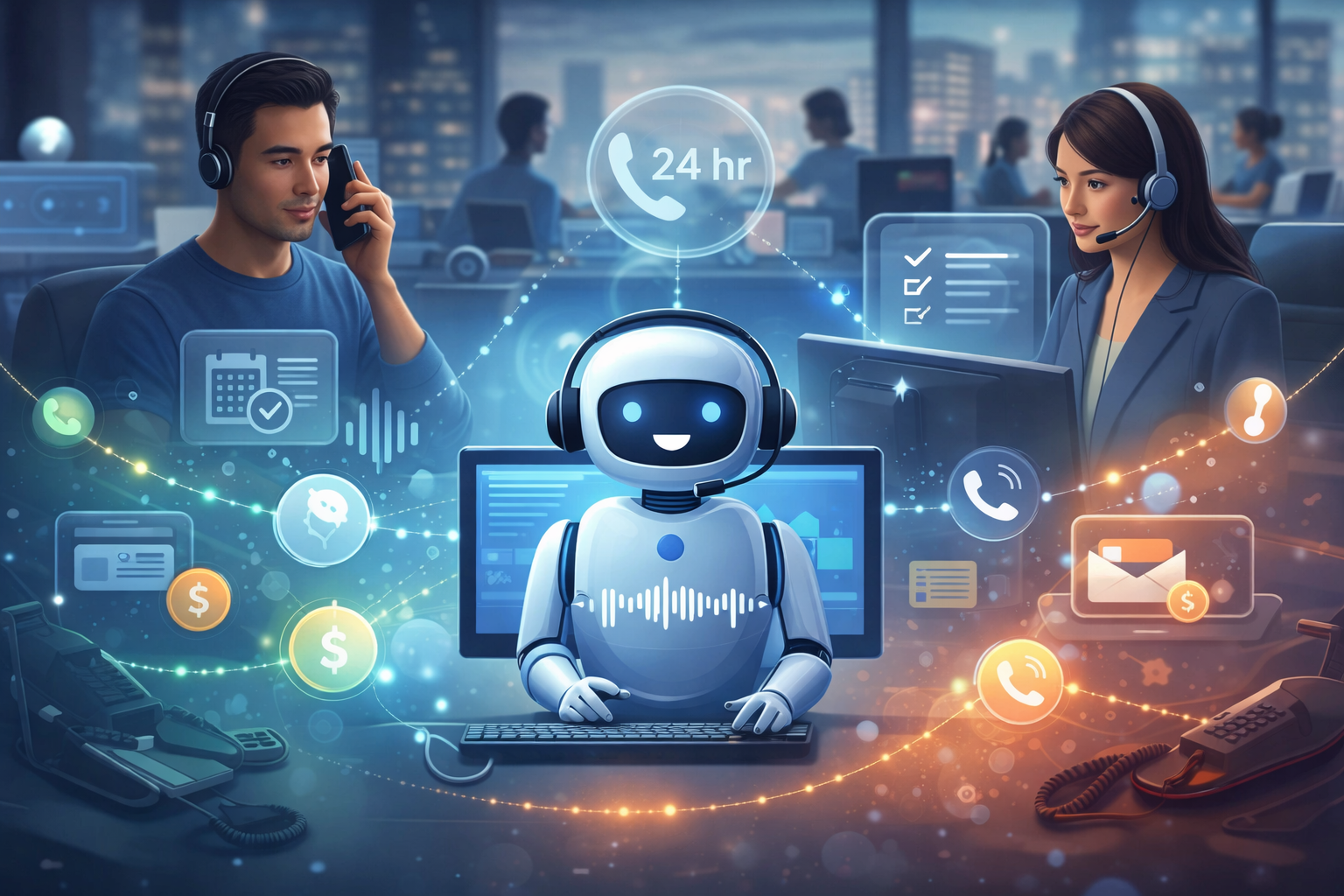
Voice bots are increasingly used in customer service and operations to manage call volumes efficiently while maintaining consistent service quality. Unlike traditional IVR systems, modern voice bots use conversational AI to understand intent, respond naturally, and guide callers through tasks.
This article explores the key use cases of voice bots in inbound and outbound calls and how they support contact center operations.
What Are Voice Bots?
Voice bots are AI-powered conversational systems that interact with users through spoken language. They use speech recognition, natural language processing, and voice synthesis to conduct automated phone conversations.
Voice bots are commonly deployed in:
- Call centers
- Customer support lines
- Service and operations teams
👉 Link: /voice-bots
Use Cases of Voice Bots in Inbound Calls
Inbound voice bots handle calls initiated by customers. Their primary role is to answer, route, or resolve queries efficiently.
1. Call Routing and Intent Identification
Voice bots identify the caller’s intent early in the conversation and route the call to the appropriate department or agent. As a result, misrouted calls and transfer times are reduced.
2. Frequently Asked Questions
Inbound voice bots answer common questions related to:
- Business hours
- Account information
- Order or ticket status
This allows agents to focus on more complex customer issues.
3. Appointment Scheduling and Rescheduling
Voice bots can book, modify, or cancel appointments by integrating with scheduling systems. Consequently, businesses reduce manual coordination and missed appointments.
4. Payment and Billing Assistance
Voice bots assist callers with billing queries, payment reminders, and balance checks, while following compliance and security requirements.
Use Cases of Voice Bots in Outbound Calls
Outbound voice bots place calls on behalf of businesses to deliver information or collect responses at scale.
1. Payment Reminders and Collections
Voice bots notify customers about upcoming or overdue payments and guide them through next steps. This helps organizations maintain consistent follow-ups without increasing agent workload.
2. Customer Notifications and Alerts
Outbound voice bots are used to communicate:
- Service updates
- Delivery confirmations
- Policy changes
As a result, customers receive timely information without manual outreach.
3. Feedback and Surveys
Voice bots conduct post-interaction surveys and capture structured feedback. This improves response rates compared to traditional survey methods.
4. Lead Qualification and Verification
Voice bots can verify customer details, confirm interest, or qualify leads before transferring conversations to human agents.
Benefits of Using Voice Bots for Calls
Across both inbound and outbound use cases, voice bots offer several operational advantages:
- Reduced call handling time
- Improved call consistency
- 24/7 availability
- Scalable call management
Therefore, voice bots are often deployed as part of a hybrid support model alongside human agents.
Conclusion
Voice bots play a practical role in managing both inbound and outbound calls. From routing and scheduling to reminders and feedback collection, their use cases span multiple customer service and operational needs.
Understanding these use cases helps organizations decide where voice automation can deliver the most value.